
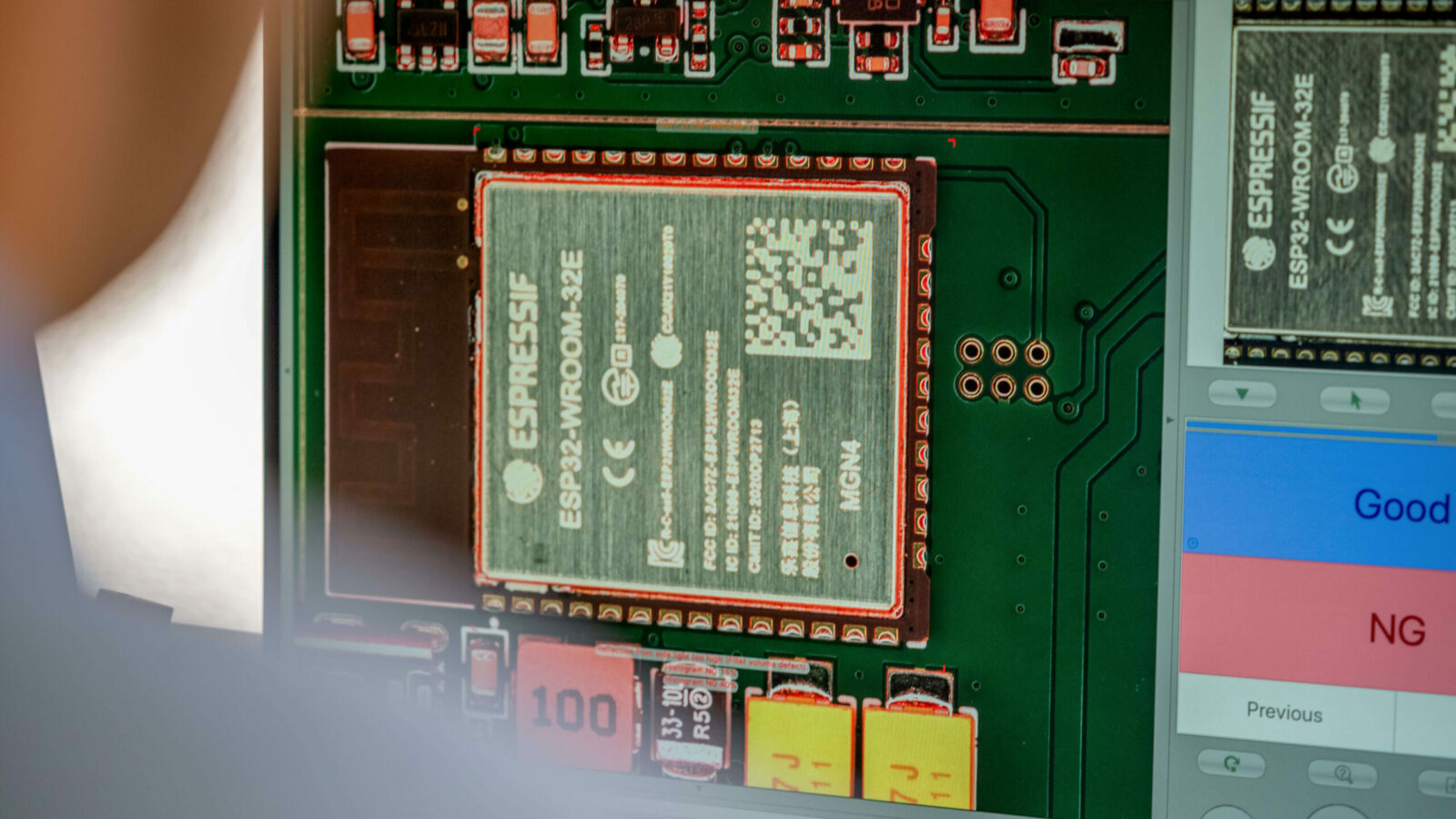
Assembly quality cannot be added at the end. Either it is built into the process, or it comes to light at the end customer. At Convel every batch of boards goes through automated optical AOI inspection on MEK/Marantz machines after SMD assembly, boards after THT assembly are inspected visually, and all the results go into the production management system. On top of that comes the ERP, which for every batch remembers what it was built from and when. We do not declare quality. We show how we check it.
What AOI inspection is and what it detects
AOI (Automated Optical Inspection) is automated optical inspection: the machine photographs the assembled board at high resolution and compares the image of every component against a reference prepared from the documentation. It does this faster and more consistently than a person, who after an hour of looking at boards begins to see less. AOI catches the defects typical of SMD assembly:
- a missing component, or a component in the wrong place,
- a part shifted or rotated relative to the solder pads,
- reversed polarity of diodes, electrolytic capacitors and integrated circuits,
- “tombstoning”, that is parts lifted at one end,
- solder bridges between leads and too little solder,
- the wrong component, if it differs in appearance or marking from the reference.
Inspection takes place after reflow soldering, so we see the final state of the joints, not the state before the oven. We prepare the inspection programme for the specific project and refine it on the first batch, to limit false alarms without letting real defects through.
What quality control looks like at Convel
AOI is the most visible element, but not the only one. The full process looks like this:
- Incoming inspection of PCBs and components: conformity with the order, the condition of the laminate, markings and packaging.
- SMD process control: solder paste printing, the first board of the run checked before the machine is released onto the full batch, an oven profile matched to the project.
- AOI inspection of every batch after reflow soldering, with the result recorded for each board.
- Visual inspection after THT assembly and manual operations: wetting, hole fill, bridges, mechanical parts.
- Functional testing, if the project calls for it: the device is programmed and checked against the specification. More on the programming and testing page.
- Final inspection before packaging: completeness, labels, serial numbers.
Boards that fail one of the stages go to analysis, not into the box. We repair the defect where possible and check whether it repeats across the whole batch. If the source is the design or a component, you hear about it from us before you order the next run.
Traceability: the history of every batch in the ERP
Inspection without a record is only a good intention. Here the result of every stage lands in the production management system, and the ERP links a batch of boards with the components it was built from: manufacturer, supplier batch number, date of receipt. That is how we can answer the questions that end in a shrug at other companies: which delivery the microcontroller in a device returned after a year came from, how many boards received a capacitor from a batch the manufacturer later withdrew, who inspected a particular run and when.
For customers in medicine, automotive, gas detection or security systems this is not an extra but a condition. For everyone else it is peace of mind: a complaint does not turn into an investigation.
What you get with the batch
At the customer’s request we hand over the inspection report for the batch, a list of the components used in production with supplier batch numbers, and the data identifying the products (serial numbers, codes) that you can load into your own system. We agree the reporting scope when production starts, so that the documents fit your processes and not the other way round.
Why inspection at the manufacturer rather than separately
Customers sometimes consider placing assembly in one place and inspection in another. It sounds safe, but it lengthens the cycle and blurs responsibility: the manufacturer claims the boards left in good shape, the inspector that they arrived bad. When assembly and inspection are in one plant, a defect goes back to the line within hours rather than weeks, and it has one owner. Us.
Frequently asked questions about quality control
What is AOI?
Automated optical inspection: the machine photographs the assembled board and compares every component with a reference, detecting missing parts, shifts, wrong polarity and solder defects.
Does AOI cover every board or a sample?
Every board in the batch. The inspection result is recorded individually.
Do you carry out functional testing?
Yes, if the project calls for it. We programme the devices and check conformity with the specification; we agree the test procedure with the customer.
Can I receive an inspection report?
Yes. We agree the scope of the reports (inspection, components, serial numbers) when production starts.
What happens to boards that fail inspection?
They go to analysis. We repair the defect where possible, check whether it affects the whole batch, and inform the customer if the source is the design or a component.
Ask about this service
Send us your project documentation and we will prepare a quote together with a proposed production schedule.
Request a quote View other services